


Missouri Makes Ammunition That Defends America. But There’s an Invisible Threat to the Supply.
18 Jun 2026
By Chris Neaville, Director of Public Affairs, The Doe Run Company
Defense Secretary Pete Hegseth has made no secret of what America’s current military operations are costing. Testifying before Congress, he confirmed that Operation Epic Fury against Iran has consumed roughly $29 billion and counting—with the Pentagon seeking more than $200 billion in supplemental funding to replenish weapons stockpiles and sustain readiness. His message to defense contractors: accelerate production dramatically and immediately.
The urgency is warranted. What is less often discussed, but equally important, is what that ammunition is actually made of, and where those materials come from. For those of us at Doe Run, that question hits close to home.
The Factory That Feeds Our Military Is in Missouri
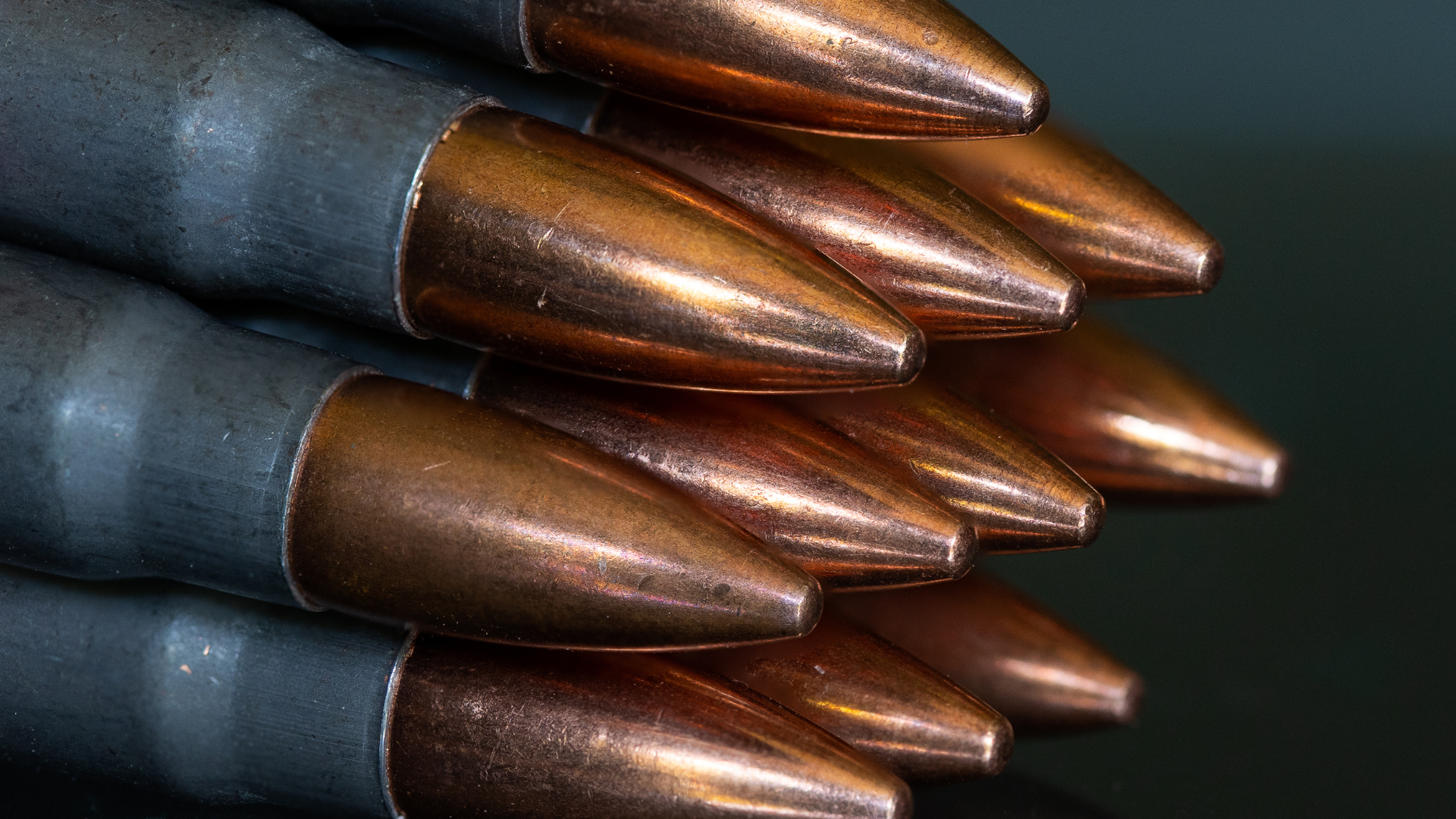
The Lake City Army Ammunition Plant, located in Independence, Missouri, just east of Kansas City, is the single largest producer of small-arms munitions for the United States Armed Forces. Operated by Winchester Ammunition, a subsidiary of Olin Corporation, the plant produces more than a billion rounds of ammunition per year, from 5.56 mm to 30 mm calibers, supplying the majority of small-caliber ammunition for the U.S. military. It has operated continuously since World War II, and it is, by any measure, one of the most strategically important manufacturing facilities in the country.
The Doe Run Company, in partnership with Olin Winchester, supplies critical materials essential to sustaining that manufacturing capability. That connection is not incidental. It enables a supply chain to work exactly as it should: domestic resources, refined domestically, used by a domestic manufacturer to protect American lives and project American strength.
Current, ongoing, and overlapping U.S. military operations underscore just how much that supply chain matters. When ammunition stockpiles are drawn down at the rate modern conflict demands, the ability to replenish them quickly depends entirely on the availability of the materials to make them, and the industrial capacity to do so here at home.
The Vulnerability Is Not the Mine. It’s the Midstream.
Here is the uncomfortable reality: the United States mines significant quantities of critical minerals, including lead, copper, and zinc. But we are sending much of it overseas for processing before importing it back as refined metal. When the nation’s last primary lead smelter closed in Herculaneum in 2013, domestic lead concentrates began flowing to foreign smelters, primarily in Asia, before returning as finished metal. The United States now imports roughly 400,000 to 600,000 tons of lead metal annually, even as we continue exporting the raw concentrates to produce it.
Think about what that means in a defense context. The lead that ends up in an ammunition round at Lake City may have crossed the Pacific twice before it was loaded into a cartridge. That is not a supply chain. That is a broken process.
Defense Secretary Hegseth has called for exponential growth in the defense industrial base, pressing contractors to multiply production capacity two, three, or four times. But accelerating the end of the supply chain while leaving the midstream dependent on foreign processing is like building faster engines without securing the fuel supply.
Doe Run Is Building the Answer
For more than a decade, Doe Run’s technology team has been developing a proprietary hydrometallurgical process. Our ACL HydroMet Process is designed to recover critical minerals from ore concentrates, recycled batteries, and even historical mining waste using liquid-based chemistry rather than high-heat smelting. The technology produces significantly lower greenhouse gas emissions, operates at lower cost, and is capable of recovering a broader range of minerals, including lead, copper, zinc, cobalt, nickel, germanium, tin, and antimony, in a single facility.
In 2024, the U.S. Department of Defense awarded Doe Run $7 million in Defense Production Act funds to build a demonstration-scale plant at our Technology Center in Viburnum, Missouri. That investment reflects what policymakers increasingly recognize: rebuilding domestic processing capacity is not merely an industrial priority. It is a national security imperative.
Missouri’s Role in the Bigger Picture
The connection between Doe Run and Lake City is a microcosm of what a resilient domestic defense supply chain should look like: critical minerals mined in Missouri, processed in Missouri, and delivered to a Missouri facility that produces ammunition for the men and women defending this country. That chain is not complete yet. But the pieces are here, and the will to build it is growing.
Missouri S&T economists have projected that a critical minerals processing hub anchored in Missouri could generate more than 23,000 jobs, $12.5 billion in GDP, and over $34 billion in gross output for the state. The economic case is compelling. So is the security case.
Equally important, we operate with significantly lower emissions than traditional smelting. Slag piles at shuttered smelter sites around the world represent not just a mineral opportunity, but an environmental one. Material that would otherwise sit in a landfill can be reprocessed and put to productive use. That is the circular economy in practice. And it’s not as a marketing concept; it’s an operational reality.
Doe Run has been part of America’s industrial foundation for more than 160 years. We are committed to being part of its defense foundation for the next 160. The work to make that happen is already underway. And the case for supporting it—with investment, with policy, and with urgency—has never been stronger.
—
Chris Neaville is Director of Public Affairs at The Doe Run Company, a privately held critical minerals and natural resources company based in St. Louis, Mo.