


2025 Letter from the CEO
5 Oct 2026
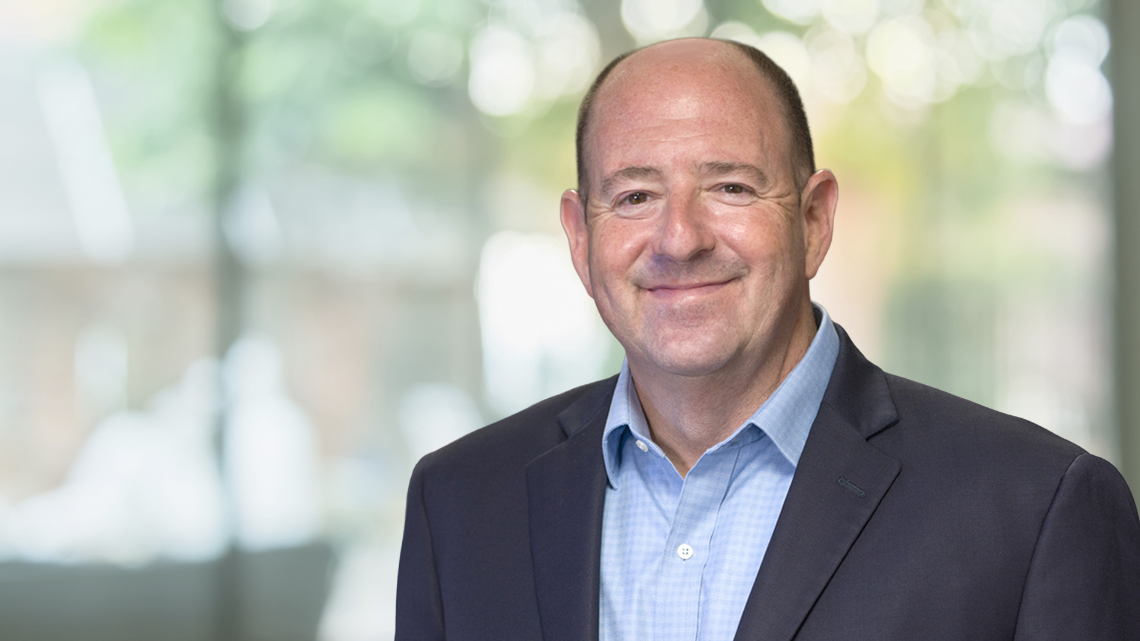
Letter from the President and CEO
Thank you for taking the time to view our 17th Annual Sustainability Report. Here you will find information on how we balance our social, economic, and environmental responsibilities while delivering a sustainable supply of select minerals, metals, and services for today, and for generations to come.
Safety, environmental stewardship, and strong relationships with our communities are core to how we operate. This report presents our progress across these areas because they protect lives, reduce operational risk, and support long-term value.
This year, we focused on practical improvements that strengthen our systems and reduce risk. We maintained our commitment to preventing harm through disciplined work practices, stronger leadership in the field, and continuous learning from operational experience. We strengthened how we manage the natural resources in our care by improving the management of resources, including efforts to extract and process minerals, supported by enhanced monitoring and controls.
We also reinforced our commitment to driving economic impact and innovation in our community by supporting local employment and strengthening partnerships with universities and regional businesses. In addition to our roughly $100 million payroll, Doe Run supports jobs for nearly 500 Missouri vendors with a local annual spend of more than $165 million.
Modernization and Innovation Deliver More Value to Extend the Life of Our Mines
At Doe Run, we understand the extraordinary responsibility of the work we do. The minerals we mine and recycle help power the systems essential for modern life. As of November 2025, every mineral we produce is now on the nation’s Critical Minerals list1, necessary for energy, manufacturing, critical infrastructure, and communications.
Sustainability reporting must reflect both actual results and the lessons learned along the way. Our results are shaped by operational realities such as site conditions, project timing, and evolving requirements, and by the actions we take to address gaps. Where we faced challenges, we strengthened our management systems and deepened the operational discipline needed to improve outcomes over time. At the same time, we are working to revolutionize the way we recover and process critical minerals.
Since mines typically shut down when they are no longer profitable rather than simply when they are depleted of ore, the pressures of processing costs and selectivity are critical factors. Our current milling and mineral processing techniques require Doe Run to be highly selective about headings being mined and to sort material underground before it reaches the mills. That effort costs money, and higher costs increase the ore grade needed to cover expenses. The ACL HydroMet Process changes that equation. Because the process can be fed by a lower grade bulk concentrate, the sorting and separation we perform underground today will no longer be necessary, meaning less time and less cost to bring material to the surface. Lower operating costs also support economically mining lower-grade ore, while enabling recovery of minerals that are difficult to recover with current approaches, including cobalt, nickel, and germanium. By lowering costs and recovering more value from the same ore bodies, we can extend the life of our mines and sustain the jobs of the people who work them.
In parallel, we continue to modernize our recycling operations to meet changing market needs. Over 30 years ago, Doe Run transformed a primary lead smelter into a facility that recycles lead batteries and other lead-bearing materials, the Buick Resource Recycling Facility, one of the nation’s largest lead recycling operations. Today, our engineers are advancing a modernization plan that incorporates the ACL HydroMet Process into our current recycling operations in addition to using off-the-shelf technology. The result is improved operating conditions for our employees, fewer emissions, lower operating costs, and better recovery of minerals, particularly tin and antimony, that arrive at our receiving dock.
There is no better message for sustainability than striving to get more from the minerals in our care. Because these minerals are owned by Doe Run, private citizens, and the federal government, the benefits of these advances reach far beyond our operations. Minerals are finite, and we take seriously the trust placed in us to make the most of the ore in our care while protecting the land for future generations.
Our long-term priorities remain clear. Protecting human health and the environment is a critical responsibility, and we will continue investing in the controls, monitoring, and readiness required to meet this obligation. We will also continue to strive to reduce emissions through the operational and technology pathways that improve efficiency and accelerate progress toward lower-carbon outcomes. Environmental stewardship will remain central to our responsibility and operational resilience, and we will continue improving monitoring and controls to safeguard local resources.
Finally, innovation must deliver both environmental progress and economic resilience. Our breakthrough hydrometallurgical technology, The ACL HydroMet Process, in development for more than 15 years, has the potential to help fuel additional critical minerals production in Missouri, strengthening domestic supply chains and supporting the responsible production needed for future generations.
In the year ahead, our focus will be to advance the ACL HydroMet Process with continued attention to improving measurement quality, strengthening management systems, and acting quickly to address gaps. Our ultimate goal is to extract critical minerals more efficiently in Missouri and to get more value out of the ore we mine. The ACL HydroMet Process operates cleaner than a traditional smelter and is designed to separate multiple minerals into marketable products—supporting more efficient mining, processing, and recycling in the United States.
Once in production, the ACL HydroMet Process will allow Doe Run to generate a greater volume of valuable resources from the same amount of mined and recycled material. Through our pilot plant, we have proven that our proprietary technology can extract a versatile array of critical minerals, including cobalt, copper, germanium, nickel, zinc, lead, antimony, and tin. These minerals are strategically important to national security, commercial production of goods, and economic well-being, and the U.S. continues to depend heavily on foreign supply for many of them. The process can also pull valuable resources from what is currently considered waste, strengthening U.S. supply and supporting environmental cleanup.
Doe Run’s Role in Moving Production Home to North America
Doe Run’s work is helping move production home. We are proud to keep 100% of our copper product in North America for processing, reducing foreign dependency and cutting emissions associated with long-distance freight. We are also continuing domestic production of zinc, keeping the vast majority of our zinc in North America for production. And our recycling operations are essential to strengthening U.S. resilience by helping support domestic battery supply chains.
Lead remains a Doe Run staple. Last year, the U.S. Geological Survey recognized lead as a critical mineral, and Doe Run is the country’s top lead concentrate producer. Our product is among the cleanest in the world and is trusted across the industry. We continue to sell 100% of our production.
Our Communities and Our People are Our Top Priorities
Our long history in Southeast Missouri means we are woven into the fabric of the region, and we are acutely aware of our responsibility, not only to future critical minerals supply, but also to the legacy of the past. Across the country, environmental challenges and remediation efforts from historic mining remain complex and ongoing. Over the years, Doe Run has invested significant resources into modernization, eco-friendly practices, and long-term cleanup at both active and historic sites, and we strive to be the best corporate citizen we can be in the communities where we have operated for generations.
The remarkable people who live and work in these communities are our greatest strength. For more than 160 years, we have remained one of Southeast Missouri’s primary employers and currently employ more than 1,200 people. We provide college tuition reimbursement and advanced training to help our workforce thrive. We encourage our employees to give back to our communities, and they routinely respond by volunteering their time and making donations to local charities.
Commitment to Sustainability
Sustainability is governed at senior levels through executive oversight and management accountability, with progress tracked through measurable targets and reviewed regularly. We will keep earning trust through transparency, measurable action, and continuous improvement. From the outset, we treat sustainability as operational resilience, protecting continuity of safe, responsible operations while supporting long-term value for our communities and stakeholders. The ACL HydroMet Process, designed to recover minerals more efficiently, is a key part of that approach. By changing the processing pathway, our technology will help us strengthen process predictability and operational reliability.
We treat permitting, local and federal, as a core risk-reduction discipline, not a procedural requirement. By coordinating early and regularly with agencies, we reduce uncertainty in environmental and operational requirements, identify constraints up front, and minimize the likelihood of delays or redesigns. This helps support resilience through the entire pilot-to-scale journey.
Finally, our partnership with state and federal agencies strengthens risk management through technical review and planning. Coordinating with the regulating agencies helps ensure that baseline assumptions, monitoring expectations, and safeguard implementation are aligned to governmental environmental priorities and grounded in sound technical oversight, supporting strong environmental outcomes and reinforcing confidence in the results from the ACL HydroMet Process.
Looking to the Future
The importance of critical mineral recovery has perhaps never been so apparent. Metals like silver and copper are hitting record high prices while the country grapples with supply chain issues from foreign dependence. At Doe Run, all the minerals we produce are now ‘critical,’ and we see a promising future. I am optimistic that our incredible workforce and our exciting new technologies will help Doe Run break through the barriers currently creating critical mineral shortages in the U.S. I look forward to another year of providing essential resources in a smart, safe, and responsible way. We always welcome any partner who can help us make a lasting impact on the local, national, and global communities we serve. Thank you for your interest in Doe Run.
Sincerely,
Matthew D. Wohl
President and CEO
1 Interior Department releases final 2025 List of Critical Minerals | U.S. Geological Survey