


Delivering Economic Impact Through Innovation and Critical Minerals Leadership
5 Oct 2026
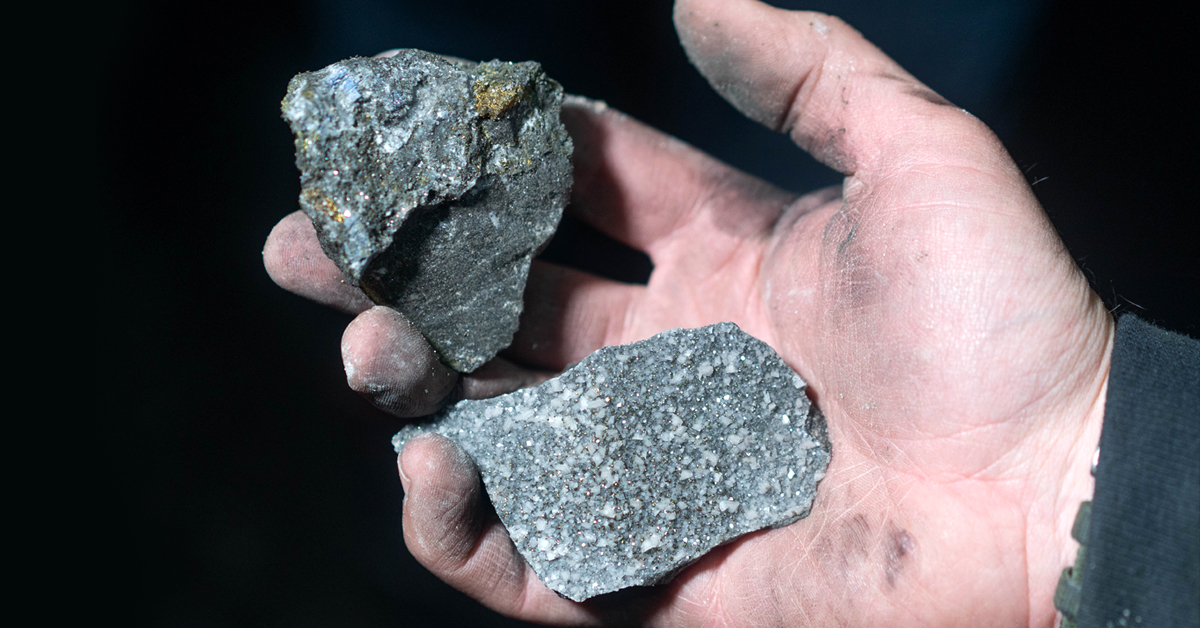
The global competition for critical minerals has moved from a background policy concern to a front-page national priority, and Doe Run and Missouri are at the center of it. In 2025, Doe Run continued to build on its position as the region’s most significant minerals producer while advancing a technological breakthrough that has the potential to establish Missouri as a hub for domestic critical mineral supply.
Why Critical Minerals Matter to Our Nation
Critical minerals are in the phone in your pocket, the electric vehicle in your driveway, the solar panels generating clean energy, and the radar and night vision systems protecting American troops overseas. The U.S. Geological Survey (USGS) defines a critical mineral as one that is essential to the economic or national security of the United States, has a supply chain vulnerable to disruption, and serves an essential function in manufacturing, and the absence of which would have significant consequences.
In November 2025, the USGS updated its official list of critical minerals, expanding from 50 to 60 commodities. Notably, both lead and copper, two of Doe Run’s three primary mined metals, were among the 10 newly added minerals. The designation reflects a federal acknowledgment of what the industry has long understood: that dependence on foreign production of these materials poses genuine economic and security risk.
Today, the United States imports its entire supply of 12-to-16 critical minerals and more than half of its supply of 29 others. China controls 85% of global critical mineral refining. So even when ore is mined under American soil, mineral concentrates are shipped overseas before returning to the U.S. as finished metal at higher cost, with greater carbon emissions, and at the mercy of foreign trade policy.
Missouri’s Mineral Wealth: The Right Resources in the Right Place
Missouri is not simply part of the critical minerals conversation, it has the potential to be an integral part of it. The state is home to one of the world’s most significant lead mining districts, the Viburnum Trend in Southeast Missouri, which has produced high-grade lead, copper, and zinc concentrates for generations. Interestingly, this same ore body holds additional minerals of growing strategic importance: cobalt, nickel, germanium, and silver. Additionally, tin and antimony can be recovered at our Buick Resource Recycling Facility. This means that as of November 2025 when the USGS updated the nation’s list of critical minerals, virtually every mineral in Doe Run’s control is now a critical mineral.
Doe Run holds 160,000 acres of mineral rights within this world-class mining district. That is not a speculative claim about future discoveries. It represents a thoroughly documented, actively producing resource, one of the most completely understood ore bodies in North America. In a world where supply chains for critical minerals are increasingly treated as geopolitical variables, that certainty carries enormous value.
Add to this Missouri’s strategic geography: situated at the crossroads of the national transportation network, with access to major rail corridors, interstates, and the Mississippi and Missouri Rivers, the state is uniquely positioned to receive, process, and distribute critical minerals throughout the U.S. to the manufacturers, clean energy developers, and defense contractors that need them.
Doe Run as a National Hub: Closing the Midstream Gap
Mining is only the first step. The real vulnerability in the U.S. critical minerals supply chain lies midstream — in processing and refining, where raw ore becomes usable metal. For decades, this capacity has eroded. When Doe Run closed the nation’s last primary lead smelter in Herculaneum, Missouri, in 2013, domestic lead concentrates began their journey overseas. Today, Doe Run ships copper, zinc, and lead concentrates internationally because the United States simply lacks sufficient processing capacity to handle them at home.
“Essentially we are exporting the middle of our supply chain,” said Rene Bustamante, Vice President of Sales and Marketing. “Ore concentrates are sent overseas for processing, where countries may keep them for their own use or turn them into end products that are then sold and exported back to the U.S.”
Doe Run’s goal, and its competitive advantage, is to change that.
The ACL HydroMet Process: A Breakthrough in Hydrometallurgy
The foundation of Doe Run’s vision for domestic processing is a proprietary technology more than 15 years in the making: the ACL HydroMet Process. Unlike traditional smelting, which requires immense heat, energy, and emits significant greenhouse gases, the ACL HydroMet Process uses liquid-based chemistry, specifically an ammonium chloride solution, to extract a wider range of metals from mineral concentrates, recycled batteries, pyrometallurgical slag, and mining chat and tailings.
The technology achieves what no other hydrometallurgical process that we know of currently in use can do: recover multiple critical minerals – including copper, zinc, cobalt, nickel, lead, tin, antimony, and germanium – with one process in a single facility, with significantly lower air emissions and a smaller carbon footprint. The chloride-based solutions are recycled within the process, minimizing liquid waste and reducing operating costs compared to conventional methods.
In 2024, the U.S. Department of Defense awarded Doe Run $7 million in Defense Production Act funds to construct a demonstration-scale plant at the company’s technology center in Viburnum, a powerful signal that this technology has been recognized at the highest levels of federal policy as essential to national security.
Independent experts in the field have taken note. Dr. Michael Moats, Professor of Materials Science and Engineering at Missouri University of Science and Technology (Missouri S&T), testified to Congress on the nation’s critical mineral crisis and has followed Doe Run’s technology development closely.
“Relying on countries like China for the processing of the minerals and metals we use every day is not a sustainable practice. Doe Run has made great strides in developing and demonstrating a hydrometallurgical process that will be a significant tool in reversing that trend.”
Dr. Michael Moats, Missouri S&T
Dr. Kwame Awuah-Offei, Center Director of the Missouri S&T Critical Minerals and Materials for Advanced Energy Tech Hub and associate professor of mining engineering, points to the broader opportunity of a potential critical minerals hub that Doe Run’s technology enables for the state.
“Missouri could become the focus of critical mineral research, testing, mining, and refining operations. The economic contributions would be felt across Missouri as the hub would be a catalyst for related industries, such as battery manufacturers, to bring their operations here.”
Dr. Kwame Awuah-Offei, Missouri S&T
The Economic Opportunity for Missouri
The economic potential of Missouri’s critical minerals leadership extends well beyond Doe Run’s fence lines. Research from the Missouri S&T Critical Minerals and Materials for Advanced Energy Tech Hub analyzed the full economic impact of building a critical minerals industry cluster in Missouri. The findings were significant:
- +5,000 new jobs in a 14-county region
- ~$5B gain in GDP for the region
- $17B in gross output for the region
When downstream impacts are included such as supply chain growth, worker spending, and the attraction of battery manufacturers drawn by proximity to materials and technical expertise that value grows substantially:
- 23,000 total jobs for the state of Missouri
- $12.5B in GDP for Missouri
- +$34B in gross output for Missouri
Doe Run’s current operations already contribute meaningfully to this foundation. In 2025, the company’s mining and recycling operations supported 1,248 employees and contributed an estimated $715 million to the Missouri economy, including $165 million in direct spending with Missouri vendors.
A stronger processing capacity, supported by the full capabilities of the ACL HydroMet Process, would multiply these contributions, attract downstream manufacturers, and help position Missouri as the domestic hub for the critical minerals supply chain the nation urgently needs.
“Our work is not only a powerful engine for our local and national economy, but also crucial for our everyday needs and for our national security,” said President and CEO Matt Wohl. “This work is poised to position Missouri as a crucial global supplier of minerals the U.S. has long imported through unpredictable foreign supply chains.”
The conversation around critical minerals has moved from policy debate to national imperative. Missouri has the resources, the expertise, the infrastructure, and the technology to answer that call and Doe Run intends to lead the way.